
Planning a Mass Timber Project
Mass Timber Design Manual Volume 1-2
ThinkWood and Woodworks
Think Wood & WoodWorks’ two-volume Mass Timber Design Manual is a free, practitioner-focused guide that blends fundamentals (products, systems, code paths) with how-to design resources (fire, acoustics, grids, CLT diaphragms), construction management tips, and real project case studies. Volume 2 adds new Q&As and technical papers, keeping the manual a living reference for architects, engineers, and builders planning mass timber projects.
Resources for Designing and Building with Wood: Continuing Education for Architects
ThinkWood and Woodworks
Think Wood’s Mass Timber continuing education hub offers free, AIA/GBCI-accredited courses for architects and designers. It covers mass timber basics, design and construction, life-safety and codes, durability, acoustics, hybrid systems, schools and tall wood case studies, and project lessons—helping you earn CEUs while learning how to plan, specify, and build with mass timber.
CLT Handbook U.S. Edition
ThinkWood
Comprehensive North American reference on designing and building with CLT. Covers material basics; structural design; seismic/wind performance; connections; fire and acoustics; durability and environmental impacts. Includes manufacturing steps, handling/transport guidance, and case studies. Useful for architects, engineers, and builders needing vetted technical criteria and practical details from concept through construction.
The Wood Handbook: Wood as an Engineering Material
Robert Ross, Forest Products Laboratory
Authoritative USDA reference on wood properties, behavior, and use. Covers anatomy, species differences, grading, and mechanical performance; effects of moisture, decay, and fire; and design considerations. Includes adhesives and finishes, engineered wood (plywood, CLT, LVL), drying and preservation practices, and sustainability. Useful for architects, engineers, builders, and researchers needing fundamentals and technical data.
Fire Design Specification For Wood Construction
American Wood Council
The 2024 AWC Fire Design Specification (FDS) is the national standard for meeting fire-resistance requirements in wood buildings. It defines materials, testing, calculation methods, and detailing for both exposed and protected wood assemblies, expanding on NDS Chapter 16. The document includes commentary and illustrations to help designers apply requirements confidently in practice.
Timber Typologies
Waugh Thistleton Architects
Waugh Thistleton’s Timber Typologies introduces the main timber building systems, standardizes terminology, and walks teams through design, procurement, and construction with practical, step-by-step guidance. It also covers key components and responsible sourcing. Positioned as the first in a series (with forthcoming Timber Policy and Timber LCA), it’s a clear primer for architects, engineers, and clients.




.jpg)


All Resources

Insurance for Mass Timber Construction: Assessing Risk and Providing Answers
WoodWorks
A concise overview that demystifies insuring mass-timber projects. It explains why some carriers are cautious (unfamiliarity, perceived risk), how premiums and coverages are evaluated, and what owners/design–construction teams can do to improve insurability (early engagement, documented protection strategies). It also provides background for brokers/underwriters and links to the full paper for deeper guidance.
Architects / Engineers, Construction Managers / General Contractors, Developers / Owners
WoodWorks — Mass Timber Building Insurance
WoodWorks
WoodWorks’ hub explains why insurers can be wary of mass timber, then gives practical ways to reduce risk. It separates issues into builder’s risk (during construction) and property insurance (after occupancy), with guidance on fire, moisture/enclosure, and site hazards. It links to the U.S. Mass Timber Insurance Playbook, a builder’s-risk questionnaire, extensive test data, and offers free project-specific support—including broker/carrier engagement.
Architects / Engineers, Construction Managers / General Contractors, Developers / Owners

Timber Typologies
Waugh Thistleton Architects
Waugh Thistleton’s Timber Typologies introduces the main timber building systems, standardizes terminology, and walks teams through design, procurement, and construction with practical, step-by-step guidance. It also covers key components and responsible sourcing. Positioned as the first in a series (with forthcoming Timber Policy and Timber LCA), it’s a clear primer for architects, engineers, and clients.
Architects / Engineers, Building Codes, Collaboration Resources, Construction Managers / General Contractors, Developers / Owners, Installers
Key Design Considerations for Mass Timber Projects
WoodWorks
WoodWorks’ guide lays out the big choices that shape a mass-timber design. Picking a construction type (III, IV, or V) sets allowed materials, height/area limits, and fire-rating targets. It explains panel thickness for strength/fire, rules for concealed spaces, extra ratings by occupancy, and when sprinklers are triggered—and how fire barriers/rated assemblies can manage those requirements.
Developers / Owners, Building Codes, Architects / Engineers

Case Study: Ascent Timber Tower
C.D. Smith Construction
C.D. Smith’s Ascent case study explains how Milwaukee’s 25-story hybrid timber tower secured approval despite height limits: the team proved Type I performance via third-party fire tests (2-hour floors/connectors, 3-hour frame), coordinated closely with city officials and fire leaders, and then broke ground in 2020—showing tall timber is achievable with rigorous testing and variance planning.
Construction Managers / General Contractors, Developers / Owners, Building Codes, Collaboration Resources

NFPA 1, Fire Code
NFPA
NFPA 1 is a comprehensive fire code that sets enforceable rules for preventing and mitigating fires in buildings and properties. It’s maintained through an open, consensus process—proposals, public comments, and committee votes—so requirements stay current, with interim updates for urgent safety issues.
Architects / Engineers, Construction Managers / General Contractors, Developers / Owners, Building Codes

Fire Design Specification For Wood Construction
American Wood Council
The 2024 AWC Fire Design Specification (FDS) is the national standard for meeting fire-resistance requirements in wood buildings. It defines materials, testing, calculation methods, and detailing for both exposed and protected wood assemblies, expanding on NDS Chapter 16. The document includes commentary and illustrations to help designers apply requirements confidently in practice.
Architects / Engineers, Building Codes, Construction Managers / General Contractors, Developers / Owners, Installers

How to Specify Regional Wood for your Mass Timber Projects
Michigan Mass Timber Community of Practice
A Michigan Mass Timber Community of Practice talk (Rand, Harms) shows how to specify regional wood using a Jessup Library case study. Key takeaways: engage suppliers early, design grids to local species (e.g., Eastern Hemlock, SPF), and use DFMA/prefab for cost and speed. Adoption hinges on early commitment, certification confidence, and evolving products (glulam, NLT, adhesives).
Architects / Engineers, Construction Managers / General Contractors, Developers / Owners

Mass Timber Construction Podcast
Paul Kremer (Spotify)
A weekly show covering global mass timber news, projects, and innovations—aimed at architects, engineers, builders, and developers. Host Paul Kremer rounds up market trends, notable case studies, and expert insights to keep listeners current on design, fabrication, codes, and delivery methods as mass timber’s role in modern construction grows.
Architects / Engineers, Construction Managers / General Contractors, Developers / Owners

Mass Timber, Part 1—Cost and Schedule Factors (resource from planning a project section) from 2019
Lewis Builds
Architects / Engineers, Collaboration Resources, Construction Managers / General Contractors, Developers / Owners

Mass Timber Schools: Building for Wellness Report
Mithun
Architects / Engineers, Construction Managers / General Contractors, Developers / Owners

Mass Timber Design Manual Volume 1-2
ThinkWood and Woodworks
Think Wood & WoodWorks’ two-volume Mass Timber Design Manual is a free, practitioner-focused guide that blends fundamentals (products, systems, code paths) with how-to design resources (fire, acoustics, grids, CLT diaphragms), construction management tips, and real project case studies. Volume 2 adds new Q&As and technical papers, keeping the manual a living reference for architects, engineers, and builders planning mass timber projects.
Architects / Engineers, Collaboration Resources, Construction Managers / General Contractors, Developers / Owners, Installers

ANSI/APA PRG 320-2025 Standard for Performance-Rated Cross-Laminated Timber
APA - The Engineered Wood Association
ANSI/APA PRG 320-2025 is the North American CLT product standard. It sets manufacturing rules, qualification tests (including adhesive fire/heat-delamination annex), QC procedures, dimensions/tolerances, materials/adhesives, appearance classes, and design values—ensuring consistent, code-recognized CLT across the U.S. and Canada for designers, manufacturers, and inspectors.
Architects / Engineers, Construction Managers / General Contractors, Developers / Owners, Installers

An Exploratory Study on Assessing Feasibility of Mass Timber and its Alternatives in Construction: Total Cost of Ownership and Stakeholder Perspectives
Rajashree Jagtap - MSU Library
This MSU thesis compares mass timber to concrete, steel, and hybrid systems using a 14-story case study in Madison, WI. Through a Total Cost of Ownership lens (build, operate, maintain, end-of-life) plus stakeholder interviews, it finds mass timber can cost more upfront but delivers long-term savings and big carbon cuts—offering practical guidance for developers and project teams.
Architects / Engineers, Developers / Owners, Construction Managers / General Contractors, Collaboration Resources

2021 Michigan Building Code
ICC Digital Codes
Michigan’s 2021 Building Code adopts the IBC with state-specific amendments for most non-residential buildings. It sets rules for design, construction, alterations, and maintenance—covering fire/life safety, structure, energy, and accessibility—and outlines permitting, plan review, and inspections. Net result: consistent, statewide standards to ensure safe, compliant building performance.
Building Codes
ANSI/APA PRG 320-2025 Standard for Performance-Rated Cross-Laminated Timber (CLT)
APA – The Engineered Wood Association
ANSI/APA PRG 320-2025 sets the North American rules for structural CLT: how it’s made, tested, qualified, and quality-controlled. It defines layups, dimensions/tolerances, materials and adhesives, joints, appearance classes, and design values. Mandatory annexes include adhesive fire-performance testing, supporting safe, durable, consistent CLT products recognized by U.S./Canadian codes and specifiers.
Building Codes

MSU STEM Building Case Study
WoodWorks
This MSU STEM Facility case study (completed Spring 2021; ~$110 M) shows how mass timber enabled flexible labs/classrooms and faster delivery. Key lessons: early team integration, delegated design, robust VDC, just-in-time logistics, tight MEP/trades coordination, and protecting work in place. It also outlines MSU’s hands-on mass-timber CM curriculum as a national model.
Installers, Developers / Owners, Collaboration Resources

Resources for Designing and Building with Wood: Continuing Education for Architects
ThinkWood and Woodworks
Think Wood’s Mass Timber continuing education hub offers free, AIA/GBCI-accredited courses for architects and designers. It covers mass timber basics, design and construction, life-safety and codes, durability, acoustics, hybrid systems, schools and tall wood case studies, and project lessons—helping you earn CEUs while learning how to plan, specify, and build with mass timber.
Construction Managers / General Contractors, Developers / Owners, Architects / Engineers, Installers

CLT Handbook U.S. Edition
ThinkWood
Comprehensive North American reference on designing and building with CLT. Covers material basics; structural design; seismic/wind performance; connections; fire and acoustics; durability and environmental impacts. Includes manufacturing steps, handling/transport guidance, and case studies. Useful for architects, engineers, and builders needing vetted technical criteria and practical details from concept through construction.
Architects / Engineers, Installers

The Mass Timber Insurance Playbook (U.S. Edition)
WoodWorks
WoodWorks’ U.S. playbook explains insurance for mass-timber projects and how to navigate carrier caution. It gives phase-by-phase tactics to reduce fire and water risk, outlines when to involve brokers/underwriters, and lists documentation insurers expect. Useful for developers, designers, and contractors seeking viable coverage, competitive premiums, and smoother approvals.
Construction Managers / General Contractors, Developers / Owners, Architects / Engineers

Insurance Procurement for a Mass Timber Project
Marsh
Marsh outlines why insurers are cautious with mass-timber projects and how to navigate it: engage carriers early, share detailed design/construction/operations info, and document fire performance, protection, and maintenance plans. They highlight their market experience, reference the new Mass Timber Insurance Playbook, and offer a white paper with deeper procurement guidance.
Architects / Engineers, Collaboration Resources, Construction Managers / General Contractors, Developers / Owners, Installers

Mass Timber Guide Specification Section
Mead and Hunt
A free, editable CSI 3-part spec (“Section 061710 – Mass Timber”) plus a brief “Risks & Rewards” addendum. Built with RDH and Jensen Hughes, it covers scope, coordination/submittals, QA/QC, moisture management and protection, fire/life-safety, and installation. The addendum flags common pitfalls and best-practice checks—helpful for teams implementing mass timber correctly.
Architects / Engineers, Building Codes, Collaboration Resources, Construction Managers / General Contractors, Developers / Owners, Installers

Masstac's Mass Timber Housing Series
MASSTAC
MASSTAC’s Housing Accelerator promotes regionally sourced wood and industrialized methods (prefab, modular) to deliver faster, more affordable, lower-carbon housing. Its eight-part “How to Mass Timber” series covers typologies from modular and custom homes to townhomes, low/mid-rise, tall timber, and retrofits. The program provides design guides, case studies, and expert resources to help teams apply these approaches effectively.
Architects / Engineers, Building Codes, Collaboration Resources, Construction Managers / General Contractors

Concealed Spaces in Mass Timber and Heavy Timber Structures
WoodWorks
WoodWorks explains how the IBC/NFPA treat concealed spaces (ceilings, cavities, plenums) in mass/heavy timber, why they’re high-risk for hidden fire spread, and what’s allowed by construction type (III, IV-A/B/C, V). It outlines compliance strategies—sprinklers, fireblocking/cavity barriers, gypsum encapsulation, limited/filled voids, MEP routing, and detailing—to control ignition/spread and satisfy AHJs.
Building Codes, Construction Managers / General Contractors, Developers / Owners, Architects / Engineers

Brock Commons: Performance Overveiw Building an 18 Story Mass Timber Hybrid Student Residence Case Study
Naturally: Wood
Naturally Wood’s Brock Commons case-study series is a practical playbook for permitting tall mass-timber. It shows how the team met height/area, egress, seismic, and fire-rating requirements—choosing the right Type IV pathway, using encapsulation/charring and tested assemblies—and, where prescriptive code fell short, securing approval via performance testing and Alternate Means & Methods. It includes modeling, construction, and performance lessons you can adapt with your AHJ.
Construction Managers / General Contractors, Collaboration Resources, Building Codes, Developers / Owners

Three Regions — Explore Mass Timber
Olifant: Collaboration with SCB (Solomon, Cordwell, Buenz), LeMessurier, Turner Construction, and other partners
A comparative study of apartment prototypes in Minneapolis, Denver, and Atlanta tests mass timber against conventional systems for cost, schedule, and carbon. Results: timber may carry a small cost premium but often trims months off delivery and meaningfully cuts embodied carbon. The work also maps regional forests/supply chains and flags market/policy hurdles—giving designers and planners actionable, place-based guidance.
Architects / Engineers, Construction Managers / General Contractors, Developers / Owners

Mass Timber Cost and Design Optimization Checklists
WoodWorks
WoodWorks’ checklists give step-by-step tactics to cut cost and risk in mass-timber projects: align the team early (designer–GC–fabricator), pick efficient modular grids, plan fire/acoustics up front, lean on 3D/VDC and prefabrication, and protect timber on site. Case studies show faster builds (often ~25–37%), leaner labor, and lighter foundations versus steel or concrete.
Architects / Engineers, Developers / Owners, Construction Managers / General Contractors, Collaboration Resources

Mass Timber Group Podacst
Mass Timber Group
A conversation-driven show exploring mass timber’s opportunities and challenges with architects, engineers, developers, and policy/sustainability experts. Episodes dive into LCA/carbon accounting gaps, tall and hybrid timber, evolving policies (e.g., embodied-carbon rules), regional case studies, and new incentives—mixing technical insight with real project lessons to advance sustainability, affordability, and innovation.
Architects / Engineers, Construction Managers / General Contractors, Developers / Owners

Contractual Considerations for Parties Embarking on Mass Timber Projects
Mishcon
This overview highlights key contractual considerations for mass timber projects: involve specialist designers and suppliers early; define fire strategy, detailing, logistics, insurance, and maintenance; and plan for advance payments on timber. It stresses warranties, clear performance obligations, moisture monitoring, and financial protections (e.g., bonds). Bottom line: proactive risk allocation and collaboration unlock speed, cost, and net-zero benefits.
Architects / Engineers, Construction Managers / General Contractors, Developers / Owners

Heartwood: Seattle’s First Tall Timber Structure
TimberLab
Architects / Engineers, Construction Managers / General Contractors, Developers / Owners

Mass Timber in Affordable Multi-Family Housing
WoodWorks
WoodWorks’ guide shows how to use mass timber cost-effectively in affordable multifamily projects. It compares structural options (post-and-beam, bearing walls, and light-frame/steel hybrids), explains fire ratings, acoustics, and MEPF routing, and gives efficiency tactics like podiums, optimized spans, and smart material choices. Case studies highlight faster installation, carbon benefits, and potential savings—helping teams balance budget, performance, and code compliance.
Construction Managers / General Contractors, Developers / Owners, Architects / Engineers

Mass Timber Business Case Studies
WoodWorks
WoodWorks’ Mass Timber Business Case Studies (2023) analyzes 10 U.S. projects—multifamily, student housing, and office—using transparent quantitative data (costs, rents/sales, lease-up, returns) and developer insights. Findings: modest cost premiums are often offset by faster schedules, strong pre-leasing, and premium rents; challenges include approvals, insurance, and logistics. Practical for developers, investors, and policymakers assessing mass timber’s financial viability.
Architects / Engineers, Developers / Owners, Construction Managers / General Contractors


Tall Timber: Mass Timber for High-Rise Buildings
Council on Tall Buildings and Urban Habitat in 2023
CTBUH’s 2023 guide surveys how mass timber is used in high-rise buildings, blending 12 detailed case studies with expert chapters on fire safety, acoustics, MEP integration, construction methods, cost, and carbon. It highlights benefits (speed, prefabrication, wellness, lower embodied carbon), evolving code pathways, and global adoption trends—positioning mass timber as a viable tall-building system.
Developers / Owners, Architects / Engineers, Collaboration Resources
ANSI A190.1-2022 Product Standard for Structural Glued Laminated Timber (Glulam)
APA – The Engineered Wood Association
ANSI A190.1-2022 sets the national rules for glulam: how it’s made, what materials and adhesives qualify, size/appearance tolerances, and the required quality-control system (plant qualification, daily QC, third-party audits, and product marking). It ensures consistent safety, performance, and traceability so designers, builders, and inspectors can specify compliant glulam with confidence.
Building Codes
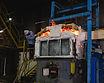
3h Mass Timber Fire Test Results
Neutral
Neutral reports two full-scale, 3-hour ASTM E119 fire tests (2025) at SwRI on glulam beam-to-column assemblies with CLT decks using off-the-shelf concealed connectors (Simpson Strong-Tie and WIEHAG). Under design loads, both ran the full 180 minutes; protection (e.g., intumescent, gypsum) limited charring and preserved capacity. The results provide open data indicating a viable path to IBC Type I-A (3-hour) performance with standard hardware—useful for designers, engineers, AHJs, and developers.
Building Codes

Portland International Airport Terminal
Sustainable Northwest Wood
A plain-English case study of Portland’s new PDX terminal shows how architects, agencies, tribes, forest owners, and suppliers teamed up to build with regionally sourced, FSC-certified mass timber. It explains how they tracked wood from forest to frame, offering a practical model for sustainable, equitable procurement and cross-supply-chain coordination on big projects.
Developers / Owners, Installers, Collaboration Resources

The Wood Handbook: Wood as an Engineering Material
Robert Ross, Forest Products Laboratory
Authoritative USDA reference on wood properties, behavior, and use. Covers anatomy, species differences, grading, and mechanical performance; effects of moisture, decay, and fire; and design considerations. Includes adhesives and finishes, engineered wood (plywood, CLT, LVL), drying and preservation practices, and sustainability. Useful for architects, engineers, builders, and researchers needing fundamentals and technical data.
Architects / Engineers


How to Successfully Cost Manage a Mass Timber Project
WoodWorks
Practical guide from WoodWorks on keeping mass-timber (CLT, glulam) projects on budget. Covers early, data-driven cost planning; choosing the right procurement model; pre-design budgeting; identifying major cost drivers; and prequalifying subs/suppliers. Useful when historical cost data is thin—helps teams set realistic budgets, de-risk decisions, and stretch value.
Construction Managers / General Contractors